





Tembo's First-Time Buyer Index Q2: Britain's postcode penalty
 Cesca Newton
Tembo's latest First-Time Buyer Index reveals Britain's housing divide is widening. We're calling it the postcode penalty: where exactly the same decision to buy a first home can leave two buyers in very different financial positions, solely based on where they live.
While buyers in the North can start building wealth from day one, those in the South face a steep uphill battle. Higher deposits and skyrocketing mortgage costs mean southern buyers are hit with a massive financial disadvantage. The good news? Buying still wins in the long run almost everywhere, it just takes a little longer to get there...

The postcode penalty is getting bigger
Andy Burnham's rise to Labour leader has put property tax reform back in the headlines, with fresh debates about replacing council tax and stamp duty with a land value tax. But while politicians argue over future reforms, Tembo's latest data shows a much more immediate crisis: Britain's biggest housing divide is already here, and it's dictated entirely by your postcode.
Our Q2 2026 First-Time Buyer Index reveals that the gap between northern and southern buyers widened yet again. While rising mortgage rates and climbing house prices squeezed budgets across the UK, the pain was far from equal:
- In the North: Relatively affordable entry prices still allow first-time buyers to begin building wealth almost immediately.
- In the South: Massively inflated deposits and high monthly repayments mean the financial rewards of buying take years longer to show up.
National housing headlines matter less than they once did. Increasingly, local affordability and regional borrowing power shape financial outcomes far more than the UK average, therefore making your postcode is now one of the single biggest predictors of whether buying today makes financial sense.
See what you could afford today with Tembo
Get certainty on your best mortgage options from +100 lenders online today with Tembo, the UK's Best Mortgage Broker for four years running.
Affordability has worsened...
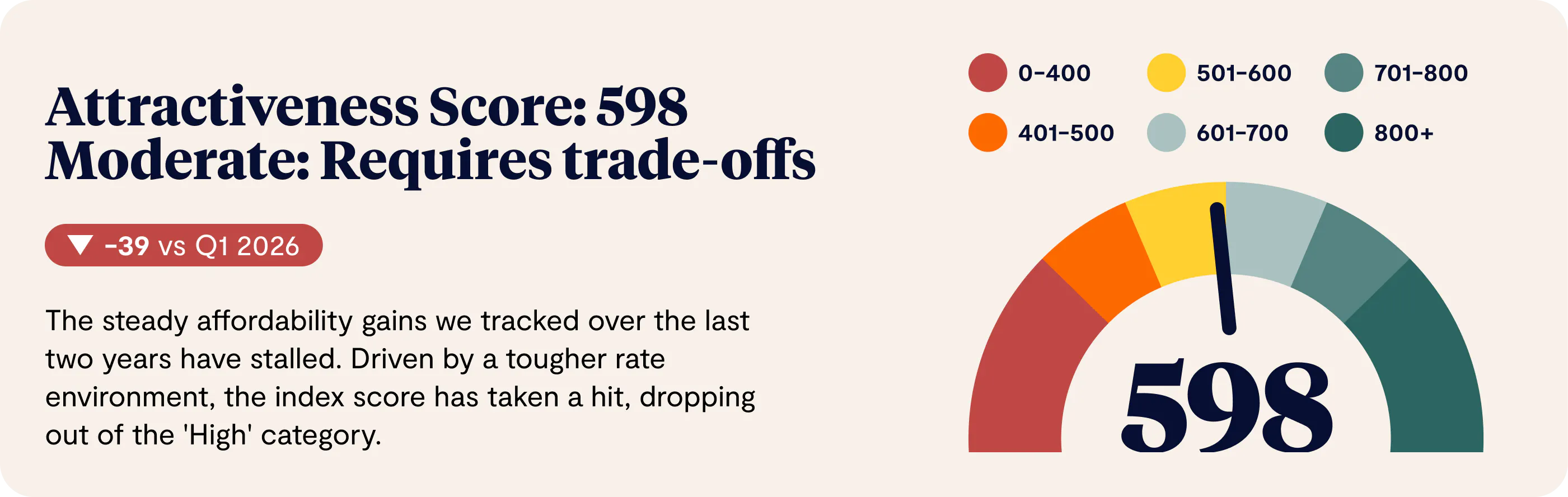
For the first time in nearly two years, the steady improvement in buyer affordability has hit a wall.
A combination of rising house prices across 14 of our 21 analysed cities and climbing interest rates through April and May has squeezed buyers from all sides.
Consequently, Tembo's First-Time Buyer Attractiveness Score slid down to 589, dropping the market from "High" to "Moderate". In the real world, this means first-time buyers are having to make tough compromises on budget, location, and borrowing power just to make a move work.
Ironically, this drop in affordability happened at exactly the same time buyers gained something they desperately needed: choice.
...but buyers have more choice
Buyers are entering a tougher market, but they are also entering one with significantly more options.
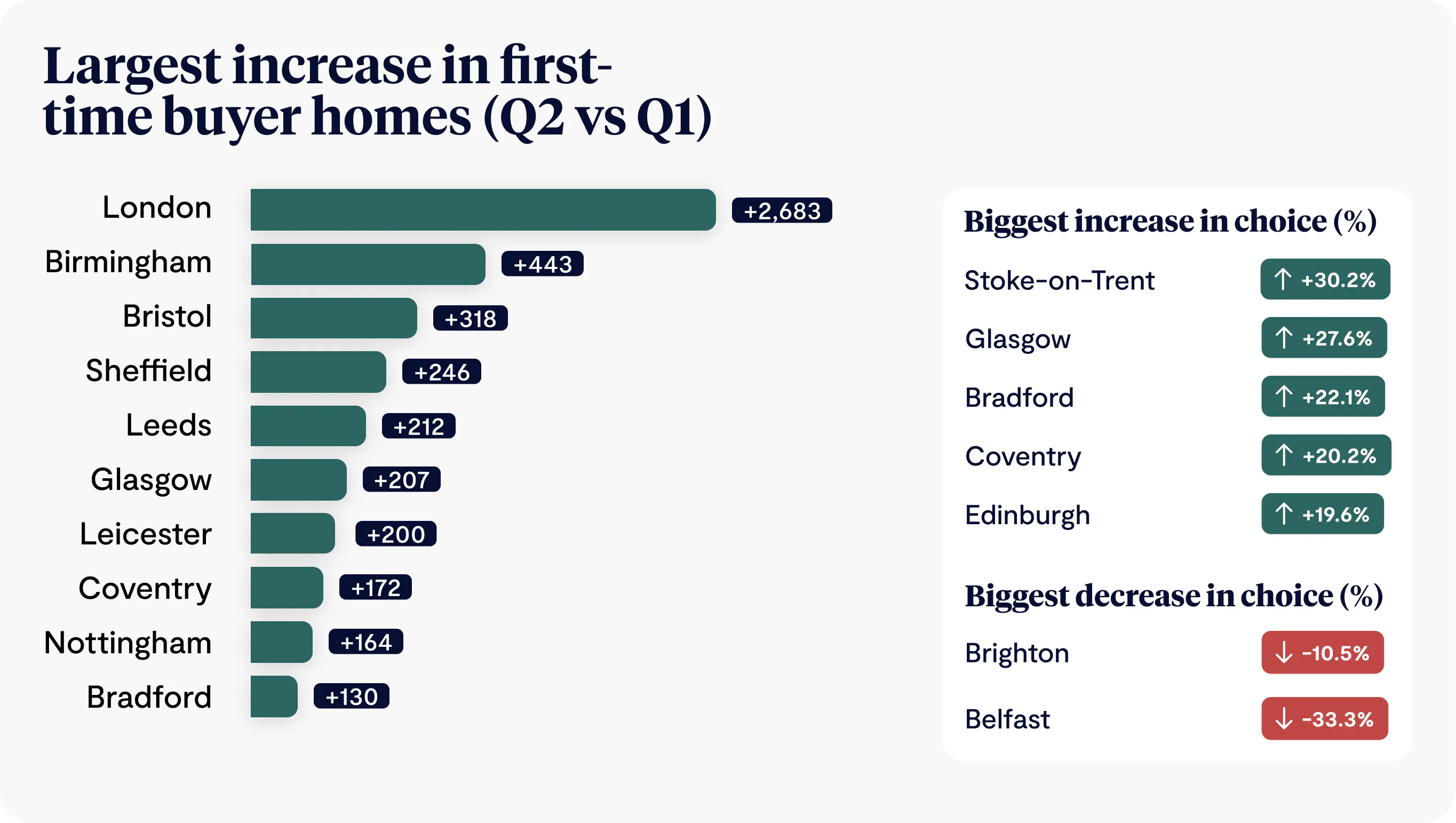
Across the UK, 20 of the 21 cities we analysed recorded an increase in first-time buyer properties hitting the market. This surge resulted in 9% more homes being available nationwide compared to Q1.
Here is how the regional map looks:
- The hotspots: Stoke-on-Trent, Glasgow, and Bradford experienced the strongest percentage growth in new listings.
- The high-flyer: London recorded the largest overall increase in total listings.
- The outcasts: Brighton and Belfast were the only cities analysed where first-time buyer stock actually declined.
More supply won’t magically fix high interest rates, but more choice gives you a massive tactical advantage. It means more room to find a home that actually fits your budget, more leverage to negotiate a lower price, and the freedom to walk away if a deal isn't right.
The postcode penalty in numbers
To understand the sheer scale of the postcode penalty, you have to look past national averages. Here's how the numbers stack up for a typical first-time buyer right now:
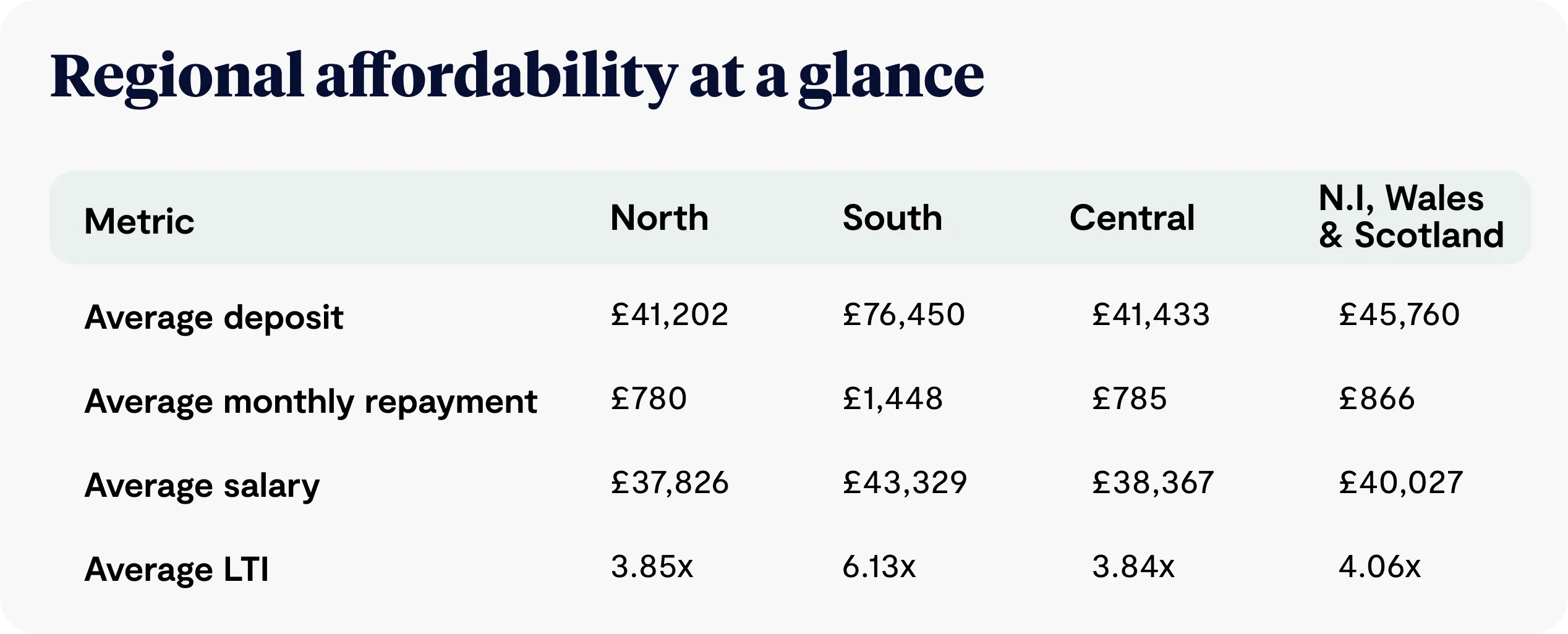
Although southern salaries are around 15% higher on average, that modest bump comes nowhere near offsetting today’s extreme borrowing costs.
Consider the borrowing hurdle: while northern buyers can comfortably secure a home under the standard banking limit of 4.5x income, southern buyers must stretch to an eye-watering 6.13 times their salary. Without a massive deposit or specialist lending schemes, getting onto the ladder in the South is increasingly out of reach for solo buyers.
Buying still wins (it just takes longer)
Despite the headlines, the idea that high interest rates have ruined the wealth-building power of homeownership is a myth. Our data proves the opposite, but your timeline depends entirely on your geography.
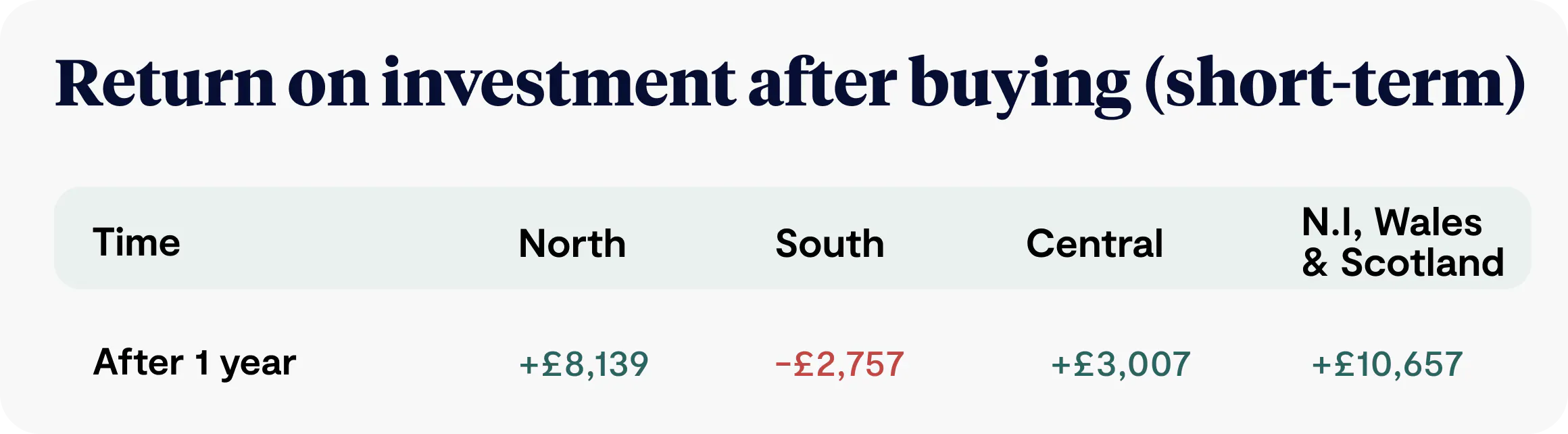
In the short term:
In the immediate term, rushing to buy doesn't always make sense in high-cost markets:
In the long term:
However, look past the 12-month mark and the picture changes dramatically. Over a five-year horizon, homeownership remains one of the single most effective wealth-building tools available. Compared to renting and investing your deposit elsewhere, buying over a 5-year period generates:
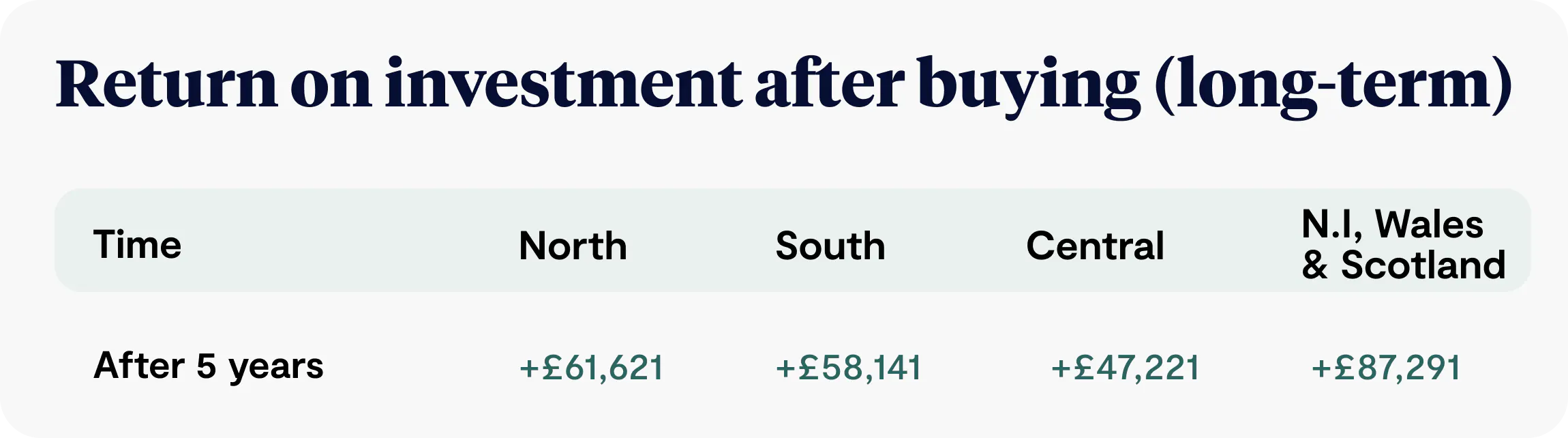
The takeaway?
Buying in the South isn't a bad financial decision; it’s just a longer-term commitment. The upfront hurdles delay the financial payoff, but they don't erase it.
The best places to buy in Britain
While national affordability has taken a hit, several cities continue to stand out as absolute havens for first-time buyers:
🏆 The reigning champion: Glasgow once again tops our rankings, offering the ultimate mix of low entry costs, strong borrowing power, and impressive long-term financial returns. Liverpool and Belfast follow closely behind.
📈 This quarter's rocket: Hull climbed an impressive seven places this quarter by combining exceptional affordability with excellent borrowing power. Sheffield and Leeds also posted strong gains.
📉 Worsening affordability: Manchester and Coventry recorded the biggest drops, driven by rising local prices rather than a drop-off in housing quality.
🛑 Firmly at the bottom: London remains anchored to the foot of the table. Despite having the UK's highest average salaries, buyers here need an eye-watering 8.66x income multiple to buy an average starter home, proof that a high salary doesn't guarantee an easy path to the property ladder.
Tembo First Time Buyer Index - Top 21 UK Cities
| Rank Q2 2026 | City | Overall score (/21) | Position Q1 2026 |
|---|---|---|---|
1 | Glasgow | 5.70 | 1 |
2 | Liverpool | 7.60 | 2 |
3 | Belfast | 7.70 | 3 |
4 | Stoke-on-Trent | 8.63 | 8 |
5 | Newcastle upon Tyne | 9.08 | 4 |
6 | Hull | 9.78 | 13 |
7 | Bristol | 10.03 | 7 |
8 | Nottingham | 10.10 | 5 |
9 | Leeds | 10.30 | 14 |
10 | Sheffield | 10.88 | 16 |
11 | Manchester | 10.93 | 6 |
12 | Southhampton | 10.95 | 9 |
13 | Edinburgh | 11.23 | 11 |
14 | Birmingham | 11.60 | 15 |
15 | Coventry | 11.73 | 10 |
16 | Derby | 11.78 | 12 |
17 | Cardiff | 11.73 | 17 |
18 | Bradford | 12.40 | 18 |
19 | Leicester | 13.80 | 19 |
20 | Brighton | 14.33 | 20 |
21 | London | 20.40 | 21 |
What this means for first-time buyers
This quarter's data tells a much more nuanced story than a simple "yes" or "no" to buying.
For buyers in the North, the market continues to deliver massive, immediate value. Lower entry costs mean you can start building equity from day one while benefiting from local price growth.
For buyers in the South, patience is key. While hit pause for the next 12 months can make short-term financial sense, homeownership still generates substantial, life-changing wealth when you look at a five-year horizon.
Ultimately, first-time buyers need to stop asking the national question: "Is now a good time to buy?"
Instead, ask the local one: "What does buying look like where I live?"
Because in 2026, the biggest factor shaping your journey onto the property ladder isn't just the Bank of England's interest rates, it's your postcode.
Beating the postcode penalty
Whether you’re saving in Manchester, browsing in Bristol, or hunting in London, you don't have to navigate this market alone. At Tembo, we scan over 100 lenders and 25,000 mortgage products to find the smart, specialist schemes that help first-time buyers beat the postcode penalty and get on the ladder.
About the Tembo First Time Buyer Index
The Tembo First Time Buyer Index tracks affordability across the housing market for first-time home buyers, using sold prices, mortgage valuations and data for recently agreed sales.
What is the Attractiveness Score?
Our First-Time Buyer Attractiveness Score is a composite index out of 1,000 that tracks how favorable the market is for new buyers by evaluating key pillars like affordability, credit health, savings, and long-term financial outcomes.