




Tembo's First-Time Buyer Index Q3 2026: Beyond the Deposit
 Cesca Newton
What if you could buy your first home with just a 2.5% deposit?
That's the promise of the government's proposed Your First Home scheme. And with the average first-time buyer now aged 34, three years older than this time last year, it's easy to see why a smaller deposit could be a game-changer.
But there's a catch. Saving a deposit is only half the battle. Buyers still need to earn enough to afford the mortgage, and our latest research suggests that could be where things get tricky.
In our Q3 2026 First-Time Buyer Index, we explore the latest housing market trends, the best cities for first-time buyers and whether Your First Home could really make homeownership more achievable.
What changed for first-time buyers in Q3 2026?
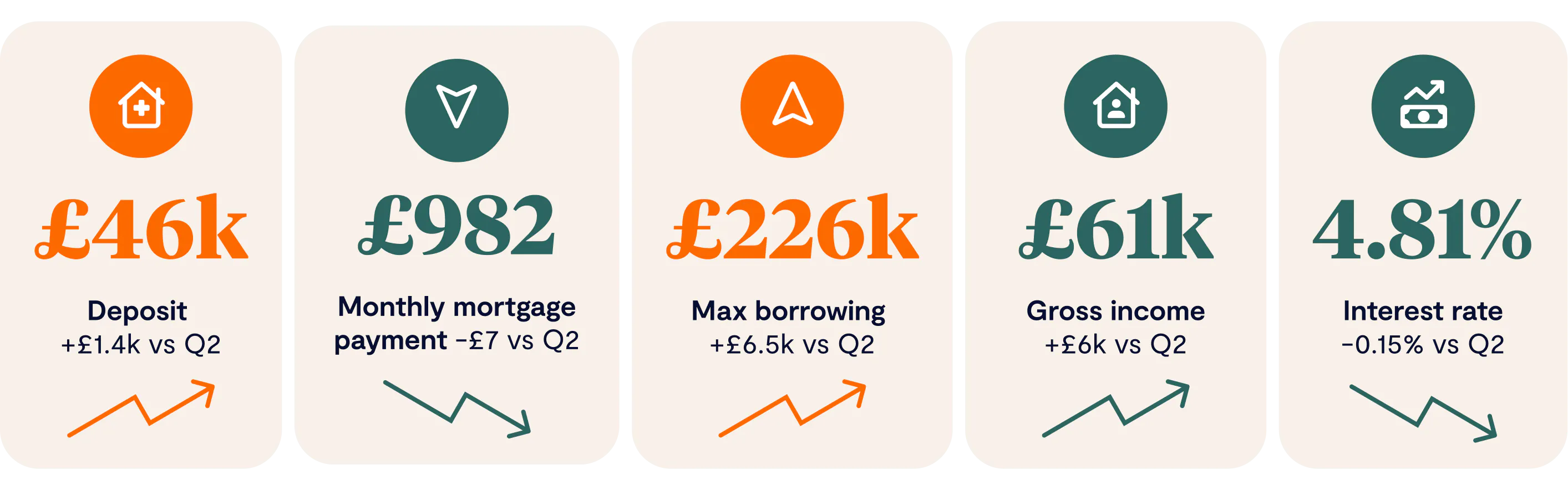
The good news is that mortgage affordability improved this quarter. Average monthly repayments fell to £982, down from £989 in Q2, while average borrowing power increased to approximately £226,000.
But despite these improvements, first-time buyers are getting older and wealthier. The average age at mortgage application has risen to 34, up from 33 last quarter and just 31 a year ago.
Buyers are also arriving with larger deposits and higher incomes. The average deposit reached £46,711 in Q3, up from £45,356 in Q2, while the average buyer's gross annual income climbed to around £61,000.
With average first-time buyer house prices also rising to £273,217, the picture is clear: buyers may have greater borrowing power, but they still need substantial savings and earnings to get onto the property ladder.
Overall, Tembo's First-Time Buyer Attractiveness Score was 597 out of 1,000, almost unchanged from Q2. In other words, the market is showing some improvements, but buying your first home still involves significant trade-offs.
Where are the best and worst UK cities for first-time buyers?
Our City Index ranks 21 of the UK's largest cities based on factors including house prices, deposits, local earnings, mortgage affordability and the longer-term financial benefits of buying.
The most attractive cities
| Rank | City | Average house price | Loan to Income (LTI) |
|---|---|---|---|
1 | Glasgow | £174,000 | 3.27x |
2 | Belfast | £185,000 | 3.89x |
3 | Liverpool | £174,000 | 3.54x |
Glasgow takes the top spot for the third consecutive quarter, while Belfast has overtaken Liverpool to claim second place.
Beyond relatively affordable house prices, the top three cities also offer potential savings compared with renting. Our modelling shows that average monthly mortgage payments are £553 lower than rent in Glasgow, £376 lower in Belfast and £200 lower in Liverpool.
The least attractive cities
| Rank from bottom | City | Average house price | Loan to Income (LTI) |
|---|---|---|---|
1 | London | £569,000 | 8.91x |
2 | Brighton | £344,000 | 6.83x |
3 | Leicester | £211,000 | 4.65x |
London remains the most challenging city for first-time buyers, with average property prices almost nine times local annual earnings.
But there are some interesting differences between affordability and the financial benefits of owning. In Bristol, for example, our modelling suggests that buying could leave a typical first-time buyer around £111,000 better off over five years than continuing to rent, when the modelled costs and benefits are taken into account.
Coventry was another standout, climbing eight places in the rankings, the biggest improvement of any city this quarter.
Want to explore all the findings?
House prices are only part of the picture. At Tembo, we explore thousands of mortgage deals and specialist schemes to help you understand your options and see how far your budget could stretch.
Could the Your First Home scheme make buying easier?
In September, the government announced Your First Home, a proposed scheme designed to help eligible first-time buyers in England purchase participating new-build properties with a 2.5% deposit, supported by a 20% government-backed equity loan.
That's a significant reduction in the amount buyers would need to save upfront. But how much difference could it actually make?
The good news: Buyers could save a deposit much faster
Our modelling across 17 English cities found that the average time needed to save a deposit could fall from:
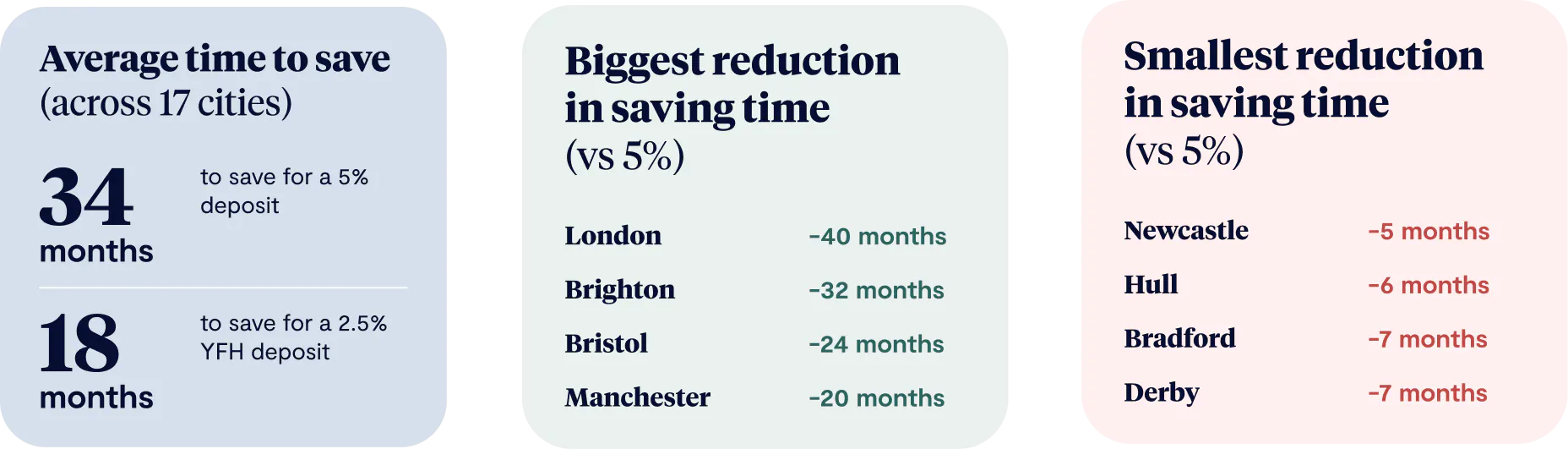
That's a saving of around 16 months, potentially bringing homeownership more than a year closer. For buyers who have spent years trying to save, this could make a real difference. But there is a catch...
A smaller deposit doesn't necessarily mean an affordable home
There are two important challenges.
Firstly, new-build homes can cost more
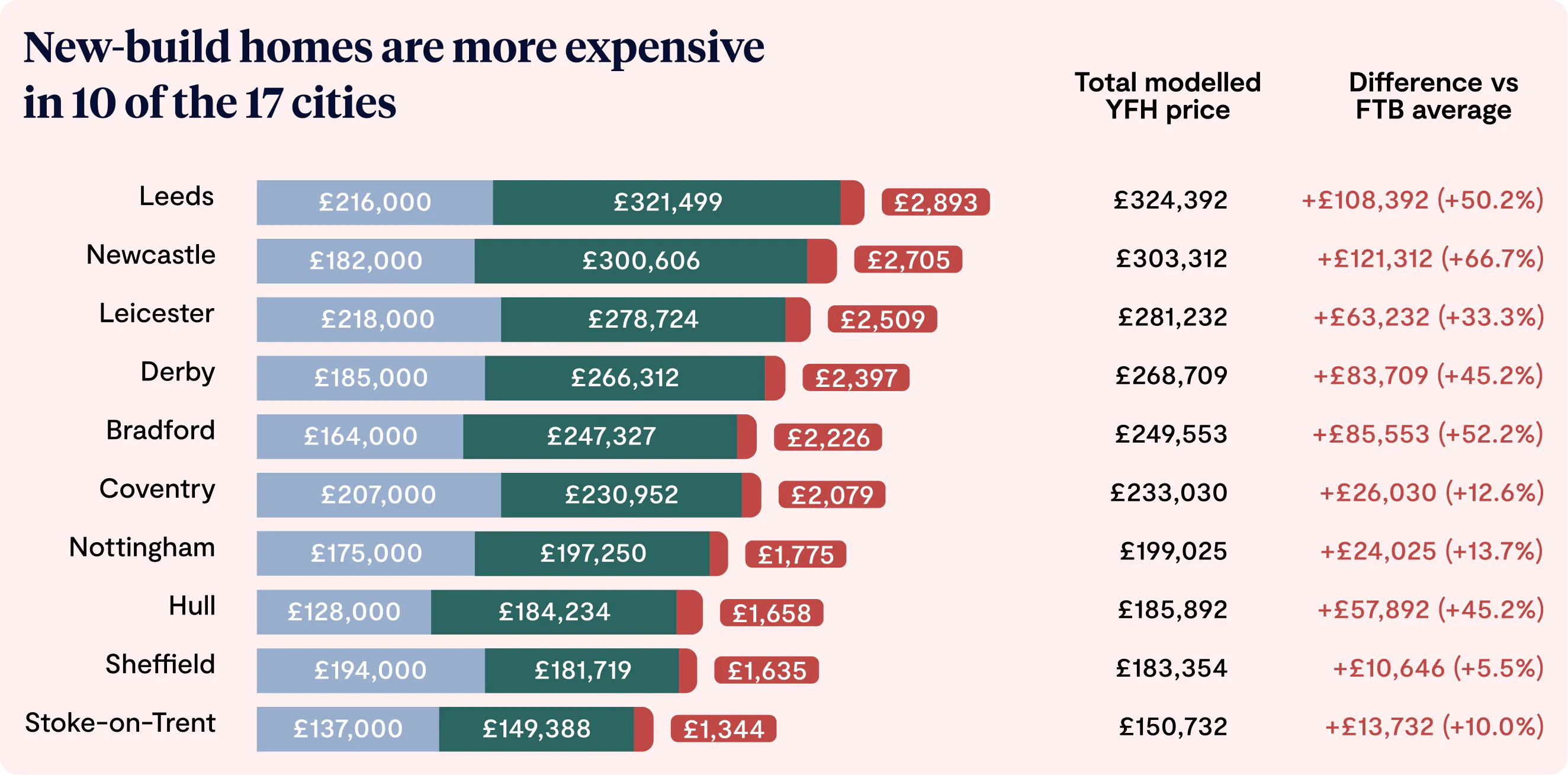
Your First Home would apply to participating new-build properties. Across the 17 cities analysed, new-build homes cost an average of £9,800 more than the typical first-time buyer property, a 4.3% premium. That means some buyers could save on their deposit but end up purchasing a more expensive home.
Secondly, buyers still need to qualify for a mortgage
Even with a smaller deposit, buyers must be able to borrow enough to cover the remaining purchase price.
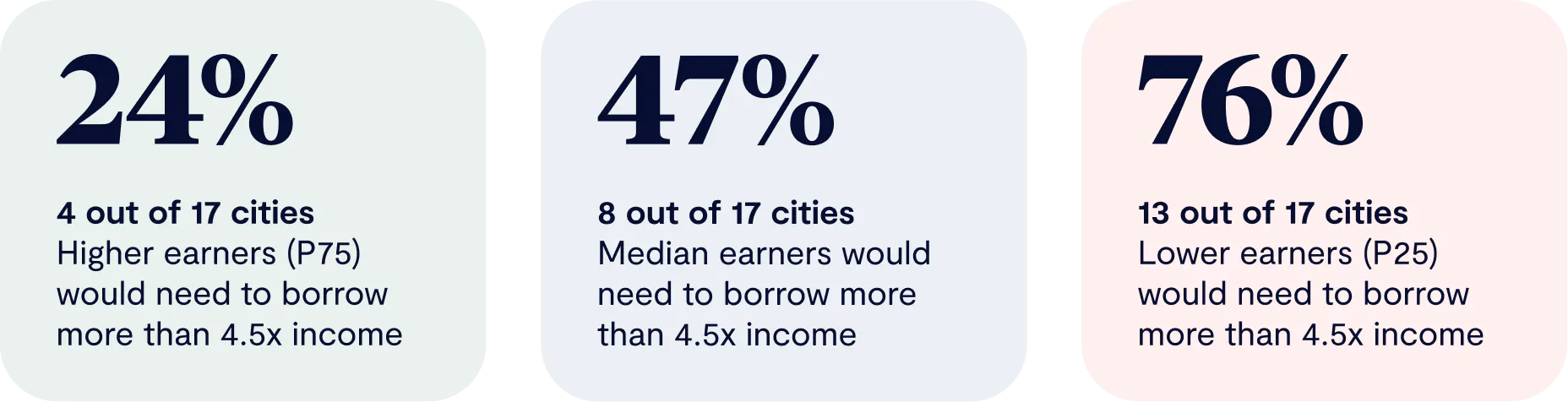
Our modelling found that lower earners would need to borrow more than 4.5 times their annual income in 13 of the 17 cities analysed (76%). This could leave the scheme out of reach for many of the lower-income buyers it's designed to support.
So, would Your First Home actually help?
Potentially, yes, particularly for buyers whose biggest obstacle is saving a deposit.
But our findings suggest that reducing the deposit requirement alone won't solve the wider affordability problem. House prices, mortgage eligibility and the additional costs of new-build ownership will still play a major role.
It's also worth remembering that the scheme's final details have yet to be confirmed. Tembo's findings are based on illustrative modelling, rather than guaranteed outcomes for individual buyers.
The bottom line
Q3 brought some welcome improvements for first-time buyers, with lower average mortgage repayments and increased borrowing power. But rising house prices and deposits mean getting onto the property ladder is still far from straightforward.
And while Your First Home could help buyers save a deposit faster, our research highlights why making homeownership more affordable requires more than simply lowering the upfront cost.
Wondering what this means for your own homebuying plans? Tembo's mortgage experts can help you understand your budget, discover what's possible and find a mortgage that works for you.
Want to see all the findings?
Download the full Tembo First-Time Buyer Index Q3 2026 for the complete city rankings, Your First Home analysis and insights into what could help more people buy their first home.
About the Tembo First Time Buyer Index
The Tembo First Time Buyer Index tracks affordability across the housing market for first-time home buyers, using sold prices, mortgage valuations and data for recently agreed sales.
What is the Attractiveness Score?
Our First-Time Buyer Attractiveness Score is a composite index out of 1,000 that tracks how favorable the market is for new buyers by evaluating key pillars like affordability, credit health, savings, and long-term financial outcomes.